Interviewer vs. Interviewer

Interviewer vs. Interviewer
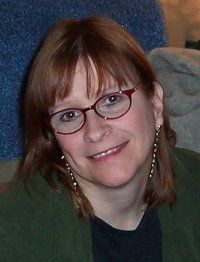
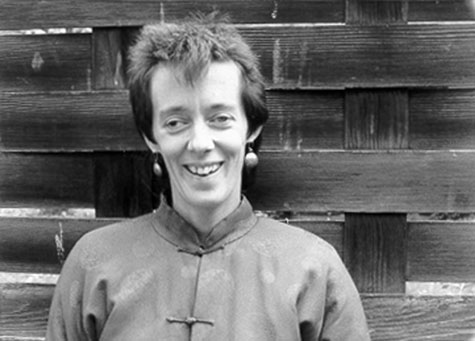
( Click on picture to view) Elizabeth Lund--Host of Poetic Lines interviews Host of Poet to Poet-- Doug Holder

Sunday, June 03, 2007

Sept 11 2007 Carl Von Essen


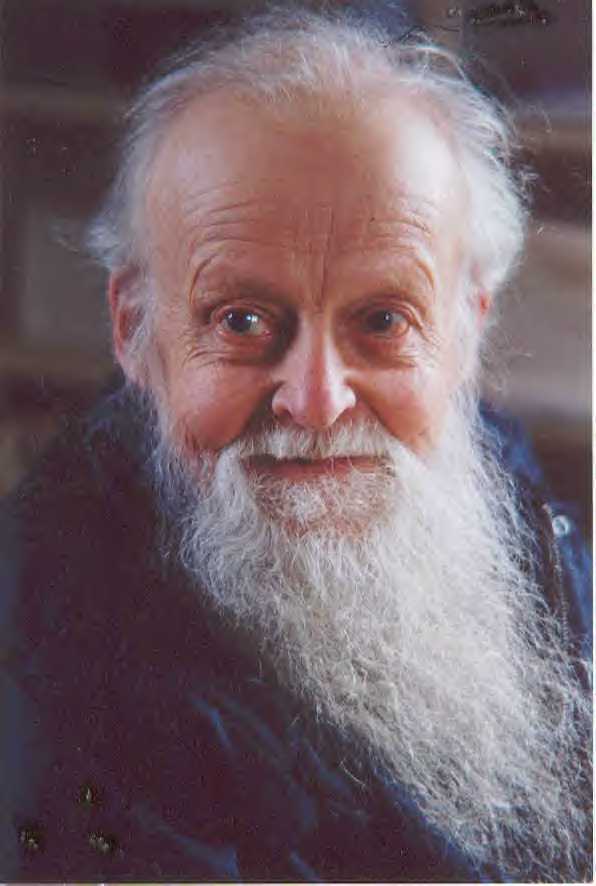
June 12 2007 5PM My guest will be: Carl von Essen. Carl von Essen was born in 1926 and raised in Northern California. After medical studies in California and Sweden, he practiced and taught in the United States, India, and Switzerland and served the World Health Organization in Sri Lanka and Zimbabwe. Throughout a long professional career spanning the globe, he devoted available time to exploring the natural world and pursuing his passion for angling. He is also the author of The Revenge of the Fishgod: Angling Adventures around the World. Carl von Essen now lives in Cambridge, Massachusetts, with his wife, the Jungian psychoanalyst Manisha Roy.

His latest book is: ""The Hunter's Trance: Nature Spirit&Ecology."

Sunday, May 20, 2007

Poet Dan Sklar May 29 5PM


June 29 5PM ---My guest will be poet and Creative Writing Director of Endicott College Dan Sklar. Dan has taught poetry, fiction, nature writing, Eastern Literature, Drama, Playwriting and Children’s Literature at Endicott College for twenty years. One of Dan’s plays was just published in “The Art of the One-Act” and his poems and stories have or will be published in the Harvard Review, Ibbetson Street, Fulcrum, and many others.

Dan is the author of the poetry collection “Hack Writer” He hold a PhD in Literature from Boston University.

Monday, April 16, 2007

Tino Viilanueva May 15 5PM


Tino Villanueva- From his humble beginnings in Texas as the son of migrant workers, "Tino Villanueva emerged as an important voice of Chicano expression in the early 1970s," wrote Dictionary of Literary Biography contributor Julian Olivares. "The poetic voice for him is an existential affirmation of being by which one achieves salvation from silence, chaos, and annihilation."
Growing up in an atmosphere of poverty and prejudice, Villanueva graduated from high school but failed his college entrance exam. Devoted to self-improvement, the young man took jobs and read extensively. Drafted into the U.S. Army in 1963, Villanueva spent two years in the Panama Canal Zone. This brought him a new understanding of his Hispanic heritage; he began reading the works of poets like Ruben Dario and José Martí.
Returning home, Villanueva enrolled at Southwest Texas University, where he produced his first poem--a sonnet--in a class for native Spanish-speakers. The poem, "Camino y Capricho eterno," was published in a local newspaper in 1968. Villanueva earned a bachelor of arts degree that same year, and moved his studies to Buffalo, New York. "Living away from the Southwest permitted him to take stock of himself and to take into account the injustices perpetrated upon him and his people," reported Olivares. Villanueva embraced the Chicano Movement, and produced the poetry collection Hay Otra Voz. "Appearing in 1972 when there were very few journals that gave space to U.S. Hispanic literary expression," Olivares continued, "Hay Otra Voz was received without any reviews." But with subsequent publications of Villanueva's poetry in journals in the U.S. and abroad, the poet began to gain more recognition.
In 1984 Villanueva began publishing Imagine: International Chicano Poetry Journal, dedicated to poetry of any language, accompanied by English translation. That same year he published Shaking off the Dark, a well-received collection that a World Literature Today critic called "a journey into the semiotic concept of biculturalism." Olivares pointed to one of the poems in the collection, "Now, Suns Later," a tribute to the poet's grandmother, as "[interweaving] light imagery emanating from two sources, the sun and the grandmother."
Villanueva's anthology, Crónica de mis años peores, acknowledges the continuing struggles faced by Hispanic Americans. But the book is "a work of triumph and of overcoming," declared reviewer Susan Smith Nash in World Literature Today. Nash concluded, "individuals are able, by sheer force of will, to overcome the effects of shaming and physical and emotional abuse is tantamount to miraculous." To a Publishers Weekly contributor, the poet's tone is "complex and hard to characterize, more on the order of wistful disappointment . . . than anything like self-pity."
In the movie Giant, a pivotal moment takes place in a Texas roadside diner, where an Anglo customer, trying to prevent the eviction of a Hispanic man by the owner, is himself severely beaten. The Anglo "to a certain extent represents the social conscience of America," remarked Tom Lewis in a World Literature Today review of the collection Scene from the Movie Giant. Villanueva turns the scene into a five-part poem, which begins with the poet at age fourteen seeing Giant for the first time. Whereas the diner scene carries much symbolic weight, Lewis added, "Villanueva's poem quietly and richly extends the movie by revealing how a lone member of its audience derived from the complex emotions it aroused in him a sense of selfhood and creativity."
PERSONAL INFORMATION
Family: Born December 11, 1941, in San Marcos, TX; son of Lino B. and Leonor (Rios) Villanueva. Education: Southwest Texas State University, B.A., 1969; State University of New York at Buffalo, M.A., 1971; Boston University, Ph.D., 1981. Memberships: American Association of Teachers of Spanish and Portuguese. Addresses: Office: Department of Spanish, Wellesley College, Wellesley, MA 02181. Agent: Odon Betanzos, 125 Queen St., Staten Island, NY 10314.
AWARDS
Ford Foundation fellowship, 1978-79; American Book Award, Before Columbus Foundation, 1994, for Scene from the Movie Giant.
CAREER
State University of New York at Buffalo, Buffalo, NY, instructor in Spanish, 1969-71; Boston University, Boston, MA, lecturer in Spanish, 1971-76; Wellesley College, Wellesley, MA, instructor in Spanish, 1974--. Locutor and program director for La hora Hispaña, broadcast for the Spanish-speaking community by Harvard University radio station WHRB. Military service: U.S. Army, 1964-66.
WRITINGS BY THE AUTHOR:
Hay Otra Voz: Poems (title means "There Is Another Voice: Poems"), Editorial Mensaje (New York, NY), 1972, 3rd edition, 1979.
(With others) Literatura Chicana: texto y contexto (title means "Chicano Literature: Text and Context"), Prentice-Hall (New York, NY), 1973.
Chicanos: Antologia de ensayos y literatura (title means "Chicanos: Anthology of Essays and Literature"), Fondo de Cultura Economica (Visión de Ningun Lugar, México), 1979.
Shaking off the Dark, Arté Publico Press (Houston, TX), 1984, revised edition, Bilingual Press (Tempe, AZ), 1998.
Crónica de mis años peores, Lalo (Los Angeles, CA), 1987, translation by James Hoggard published as Chronicle of My Worst Years, TriQuarterly Books (Evanston, IL), 1994.
Tres Poetas de Posguerra: Celaya, Gonzalez y Caballero Bonald: (Estudio y Entrevistas), Tamesis Books (London, England), 1988.
Scene from the Movie Giant, Curbstone Press (Willimantic, CT), 1993.
La llaman America, Curbstone Press (Willimantic, CT), 1996.
Contributor in El Espejo/The Mirror: Selected Chicano Literature, edited by O. Romano and H. Rios, Quinto Sol Publications, 1972; and We Are Chicanos: An Anthology of Mexican-American Literature, edited by Philip D. Ortego, Washington Square Press, 1974.
Contributor of poetry to San Antonio Express/News, Persona, El Grito, Entre Nosotros, Caribbean Review, Hispamerica: Revista de literatura, Revista Chicano-Riqueña, Poema Convidado, and Texas Quarterly; contributor of essays to Cuadernos Hispanoamericanos, Papeles de Son Armadans, and Journal of Spanish Studies: Twentieth Century

Wednesday, March 28, 2007

April 17 Poet Molly Lynn Watt


April 17 5PM My Guest will be Molly Lynn Watt:


Molly Lynn Watt carries a pen, a notebook and a journal as she travels, whether to Harvard Square, China, Ireland or Alaska to record her wonderings. She shapes adventures and questions into poems, essays and stories sometimes illustrated with photographs. She is an original member of Cambridge Cohousing community, a longtime progressive educator and a peace and justice activist. She facilitates the monthly Fireside Poetry Readings on the last Tuesday of each month (usually) with neighbors, Jenise Aminoff and John Hildebidle. Check out NoCa's events and www.cambridgecohousing.org/poetry/ for reading dates. Molly is the author of the poetry collection: "Shadow People." ( Ibbetson, 2007)

Wednesday, March 14, 2007

Harris Gardner-Founder of The Boston National Poetry Festival


March 27 2007: 5PM My guest will be poet/organizer/activist/ Harris Gardner http://tapestryofvoices.com founder of:


(Harris Gardner, and friends...)

THE BOSTON NATIONAL POETRY MONTH FESTIVAL Now in its SUCESSFUL Seventh !!! Year

CO-SPONSORS:Tapestry of Voices & Kaji Aso Studio in partnership with The Boston Public Library. Starts Saturday, April 14th, 2007 10:00 A.M. To 5:00 P.M. and Sunday, April 15th, 2007 from 1:00 P.M. to 4:45 P.M.. OPEN MIKE: Sunday, 2:00 to 3:30 P.M. The festival will be held both days at the library ’s main branch in Copley Square.56 Major and emerging poets will each do a twenty minute reading; also Featuring 15 elementary school students from the John Eliot Elementary School.These fifth and sixth graders will open the festival with poetry by Langston Hughes,Ogden Nash, Carl Sandburg, Shel Silverstein, Maya Angelou, other poets, and their own originalpoetry. They will be followed by prize winning poets Alden DiIanni-Morton and Shari Caplan, two seniors at Boston Latin High School. The 55 major and emerging poets will follow with a:

POETRY MARATHON. Some of the many luminaries include Diana DerHovanessian , Afaa M. Weaver, Rhina P. Espaillat, Richard Wollman, Lloyd Schwartz, Maxine Kumin, Fred Marchant, Barbara Helfgott-Hyett, DanTobin, Charles Coe, Steven Cramer, Danielle Legros-Georges, Regie Gibson, Marc Widershien, Tino Villanueva, and Doug Holder.
This festival has it all. A plethora of professional poets, celebrities, a Pulitzer Prize Winner and former National Poet Laureate, numerous award winners, student participation.Even more, it is about community, neighborhoods, diversity, BOSTON and MASSACHUSETTS. This fast growing tradition is one of the largest events in Boston’s Contribution to National Poetry Month. FREE ADMISSION !!
For information: Tapestry of Voices, (617-306-9484) or
617-723-3716 Library: (617)- 536-5400

Wheelchair accessible. Assistive listening devices available. To request a sign language interpreter or for other special needs, call (617) 536-7855 (TTY) at least two weeks before the program date.

Thursday, February 22, 2007

Poet, Publisher, Playwright Diana Saenz March 6 2007


My Guest March 6 2007 5PM:


Diana Saenz was born in Los Angeles, California. She lived for a time with her grandparents in Fresno, California. She recounts her memories of Central California as among her most powerful memories, specifically recalling of the scent of Oleanders that proliferated in her grandparents' neighborhood, in Fresno.

Diana Saenz is a playwright and poet who has been writing for 35 years. Her fifteen plays have been produced in California, Massachusetts, Texas and Maine. She has written three books of poetry, and numerous articles and short stories. Saenz founded "The Boston Poet," an event calendar for poets.

Diana later founded the online journal http://www.bostonpoet.com and the Boston Poet Journal.

Saturday, February 10, 2007

Feb 27 5 PM Poet Alfred Nicol author of "Winter Light"


Alfred Nicol worked in the printing industry for twenty years after graduating from Dartmouth College, where he received the Academy of American Poets Prize. He now lives in Amesbury, Massachusetts and is a member of the Powow River Poets. He edited the Powow River Anthology, published by Ocean Publishing in 2006, and was the recipient of the 2004 Richard Wilbur Award for his first book of poems, Winter Light, published by The University of Evansville Press. His poems have appeared in Poetry, The Formalist, Measure, Commonweal, Verse Daily, The New England Review, Atlanta Review, and other journals. Several of his poems have been anthologized in Contemporary Poetry of New England, Sonnets: 150 Contemporary Sonnets, and Kiss and Part. The last of nine installments of his long poem, “Persnickety Ichabod’s Rhyming Diary” will appear in Light Quarterly, Vol. 52.


"Nicol is much more than a poet's poet; he is also a reader's poet, and his work, though dazzling, is not intended to simply dazzle but to convey, with charm and profundity, the experiences of our common life." -- Rhina P. Espaillat

"How different an aesthetic Nicol shows in the splendid Winter Light, as canny and moving a formalist collection as I have seen in years." -- Sydney Lea

"On every page Nicol exhibits a genuine largeness of spirit and grace of mind. His techniques are well-honed. This is certainly among the finest new volumes of poetry I have read in years." -- Jay Parini

Friday, February 02, 2007

Feb 13 2007 My guest will be John Hodgen


My guest Feb. 13 5PM will be poet John Hodgen. Hodgen will be reading from his new book, Grace.Winner of the 2005 Donald Hall Prize in Poetry. Hodgen, who teaches writing at Assumption College in Worcester, has two other prize-winning books, and his poems, according to Ha Jin, National Book Award winner and professor at Boston University, contain "a voice that speaks directly from the heart."His publications include the anthologies Witness and Wait: Thirteen Poets From New England and Something and We Teach Them All: Teachers Writing About Diversity. His other honors include the Grolier Prize in Poetry in 1980 and an Arvon Foundation Award (Kensington, England) in 1981.

Wednesday, January 24, 2007


Feb 6 2007 5PM: My guest will be Manisha Roy. Roy was born in Northeast Assam, India, and educated in Calcutta. Once an anthropologist, she is now a writer and lecturer of Jungian psychotherapy. She has been a practicing psychotherapist since 1985 in Boston. She is the author of "Bengali Woman" and " Cast The First Stone: Ethics in Analytic Practice" among other works.

Wednesday, January 10, 2007


Jan 16 5PM My guest will be the poet Martha Collins.


Martha Collins is the author, most recently, of Blue Front, a book-length poem based on a lynching her father witnessed when he was five years old in Cairo, Illinois, published May 2006 by Graywolf Press. She has also published four collections of poems, two books of co-translations from the Vietnamese, and a recent chapbook of poems, and has edited a collection of essays on the poet Louise Bogan.


Collins' awards include fellowships from the NEA, the Bunting Institute, the Ingram Merrill Foundation, and the Witter Bynner Foundation, as well as three Pushcart Prizes, the Alice Fay Di Castagnola Award, and a Lannan residency grant.


A selection of poems from Blue Front won the Laurence Goldstein Poetry Prize in 2005; other selections from the book appeared in Kenyon Review and Ploughshares.
Collins founded the Creative Writing Program at UMass-Boston, and since 1997 has taught at Oberlin College, where she is Pauline Delaney Professor of Creative Writing and one of the editors of FIELD magazine and Oberlin College Press.

Sunday, December 31, 2006


Jan 9 2007 5PM My guest will be Nate Graziano.


Biography
I currently live in Manchester, New Hampshire with my beautiful wife Liz and two beautiful children, Paige and Owen. I teach writing at Pembroke Academy in Pembroke, New Hampshire.
In 2002, my first hardcover collection of fiction Frostbite was published by Green Bean Press. In October of 2003, my first full-length collection of poetry Not So Profound was also published by Green Bean Press. I'm the author of a number chapbooks and broadsides of poetry and fiction. In July, sunnyoutside will be publishing a new volume of poetry titled Honey, I'm Home.
I was born in 1975 and grew up in West Warwick, Rhode Island. I attended college at Plymouth State in New Hampshire, lived a year in Las Vegas, and have since been freezing my ass off here. I'm currently a part-time graduate student in the fiction writing program at the University of New Hampshire. For more information, read my books. They reveal a lot.
My work has been published by some of the following print journals, zines and organizations: Nerve Cowboy, Staplegun, The Black Bear Review, Way Station Magazine, Heeltap, The Owen Wister Review, Angelflesh, The Chiron Review, Unwound, Iodine, Poesy, Art:Mag, Blind Man's Rainbow, The Silt Reader, Heeltap, Gros Textes(Belgium), The Brobdingnagian Times(Ireland), Main Street Rag, Controlled Burn, Anthills, The Dublin Quarterly (Ireland) and Bottle 3.
Places To find my work on-line:http://www.sniffylinings.com/
http://www.thundersandwich.com/
http://www.the-hold.com/
www.openwidemagazine.co.uk/
http://www.myfavoritebullet.com/
http://www.remarkpoetry.net/
http://www.dublinquartlerly.com/

Wednesday, December 06, 2006


Jan 2 2007: 5PM My guest will be Somerville Poet Bert Stern:


Bert Stern was born in Buffalo, New York in 1930. He was educated at the University of Buffalo, Columbia,and at Indiana University, where he earned his Ph.D. in English.
Stern taught for forty years at Wabash College, where he is now Milligan Professor of English, Emeritus. He also taught from 1965-67 at the University of Thessaloniki and from 1984-85 at Peking University. He presently teaches in "Changing Life Through Literature," a program for men and women on probation.

His poems have been published in New Letters, The American Poetry Review, Indiana Review, Poetry, Spoon River Poetry Review, among others, and in a number of anthologies. His chapbook, Silk/The Ragpicker's Grandson, was published by Red Dust in 1998. His essays and reviews have appeared in Sewanee Review, Southern Review, Modern Language Review, The New Republic, Southern Review, Columbia Teachers’ College Record, Adirondack Life, and in a number of anthologies. His critical study, Wallace Stevens: Art of Uncertainty, was published by the University of Michigan Press in 1965

Thursday, November 16, 2006


My guest Dec. 5 5PM will be Richard Wollman:

Evidence of Things Seen. Richard Wollman. ( The Sheep Meadow Press POBOX 1345 Riverdale-on-Hudson NY 10471)

Simmons College literature professor Richard Wollman in his new poetry collection: “Evidence Of Things Seen” writes of shucking clams, of Lester Young in a ruminating Paris, of a church that reflects the images of subverted and converted Jews, and he does it with elegiac and evocative language. In his poem “Pressure” Wollman describes his inept attempts to shuck clams. Here is a portrait of a poet who is just as shucked as his crustacean charges:

“but there was no remedy for dull knife slips in the flesh of my hand beneath the thumb where I’d slice myself open like an unprotected clam.I t was ruining my hands.The boss knew I didn’t have to do this for my living and waited for me to quit, baited me, making me stand on the bar to clean the grease…No one ever poured a drink until I dragged myself back there, the only one who could no longer smell the liquor of the fish all over us.”

I have always been a fan of the “ Pres” and “Lady Day,”. In “Lester Young in Paris” we have a portrait of the “Pres” (Young), the famous jazz saxophonist, as deadens his pain, and his ghosts with booze and his art. In some respects the poem reads like a haunting, late night jazz composition:

“In the studio he wore felt slippers. It was a way to live,deaden the noise of fists,the reedy wheeze of his breath stolen one night in a white barracks. And the squawk of hospital doors up north. In curved brass, pain takes the shape of song, the sense variously drawn out. What can be made of the low sounds of men? He drank deep until he finally drowned them.”

Recommended.

Wednesday, November 01, 2006


My Guest Nov 14 at 5PM will be poet Richard Moore:


Of Richard Moore's ten published volumes of poetry, one was nominated for a Pulitzer Prize and another was a T. S. Eliot Prize finalist. He is also the author of a novel, The Investigator (Story Line Press, 1991), a collection of essays, The Rule That Liberates (University of South Dakota Press, 1994), and translations of Plautus' Captivi (in the Johns Hopkins University Complete Roman Drama in Translation series, 1995) and Euripedes' Hippolytus (in the Penn Greek Drama Series, U. of Pennsylvania, 1998). Moore's most recent poetry books include The Mouse Whole: An Epic (Negative Capability Press, 1996) and Pygmies and Pyramids (Orchises Press, 1998). His newest collection of poems, The Naked Scarecrow, was published by Truman State University Press, New Odyssey Editions, in the spring of 2000. He is listed in Who's Who In America, and articles on his work have appeared in The Dictionary Of Literary Biography and numerous newspapers and journals. His fiction, essays, and more than 500 of his poems, have been published in a great variety of magazines, including The New Yorker, Atlantic, Harper's, Poetry, The American Poetry Review, and The Nation. He has also published translations of poetry in German, French, and Italian. He gives frequent readings, lectures and dramatic performances in Boston, Washington, and other cities.

Saturday, September 23, 2006


My Guest Oct 17 2006 5PM will be author and pilot Patrick Smith:


The 5X5 Interview: Patrick Smith, Ask The Pilot
Patrick Smith is sure one doggone aviator extraordinaire. In his "Ask the Pilot" column for Salon.com, he dispels common airline myths, explains the beauty of certain flight patterns, and tries to keep terrorist hysteria to a minimum. That's all well and good, but what about the mile-high club and how getting bumped to first-class simply ruins you for flying with the peons in steerage ever again? We asked the pilot these questions and more, and miraculously he answered without demanding security strip search us first.

Age: 38
Occupation: Patrick Smith is an erstwhile airline pilot and author of a popular weekly air travel column at Salon.com and a book author. Location: Somerville, Massachusetts, just outside Boston

1. The fan mail from your column: I bet you receive an inordinate amount from people wanting to discuss the "mile-high club." What would you like to say here to end this conversation once and for all (well, at least for me)?
That it's not worth the effort? Granted this is one of those for-the-sake-of-it thrills, but the novelty only goes so far. I mean, what could be a more erotic setting than the closet-sized lavatory of a jetliner, wedged between a chemical toilet and a filthy, napkin-clogged waste receptacle? But hey, knock yourself out.
That said, some airlines are installing lower-deck sleeping suites for premium class passengers. Those on Virgin Atlantic, I remember reading, will have full double beds and total privacy.
As for me I'll admit nothing, but, not for any reason, I'd like you to imagine three things: (1) A Swedish exchange student. (2) a four-seat Piper Cherokee (with no autopilot). (3) a lazy half-hour above the marshes and estuaries of Newburyport, Massachusetts.
2. Salon is rightfully proud of its independent-press status. Is it an ethical choice of yours to work for them or could you just as easily see yourself in an office in the towers of Conde Nast?
It's less a choice than an accidental fit. I'm a pretty liberal guy, politically, which lends itself nicely to Salon's leanings. Not sure how that happened; I grew up in a blue collar suburb and went to a Catholic high school. But during the mid-1980s, in my late teens, when most would-be pilots were enlisting for ROTC, I was hanging out in the hardcore punk rock scene, which, if you remember, was virulently leftist and anti-Reagan. Most of my ideological sensibilities probably owe to that period -- getting out of the suburbs and into the city.
But finding a home at Salon wasn't by design. I certainly don't *choose* to use credit cards to pay my rent, and a mainstream gig could make life a lot more comfortable.
I think (hope) Salon appreciates my ability to pull in readers from across the spectrum, at least when I stick to aviation's more nuts-and-bolts issues. You'd be surprised, though, how often ideology makes its way into a topic. As a general subject, air travel is seemingly apolitical -- at least the way others have covered it -- but there have been loads of partisan controversies: debates over security, racial profiling of passengers, cockpit guns and so forth. Some of my writing gets fairly provocative. Last winter, you might recall, a Christian pilot found himself in hot water after he evangelized to a planeload of people over the PA. So I went and looked at the way airlines around the world mix religion and flying. Those were two of my favorite columns.
3. I was once bumped up to first-class for a Virgin flight to the U.K. and I really don't know if I can fly in lesser accommodations again. The other half really does live quite a lot better. Can you dispel any of the wonderful feelings that remain from that flight, or is it really as good as it seemed for that one blissful trip?
You're screwed. There's no going back. It's funny though, your use of the phrase, "the other half." I used to have a girlfriend who was repulsed by the idea of separate classes on airplanes. Obviously she never had a sleeper seat on a 14-hour nonstop.
It's ironic, because while we whine about the worsening discomforts of economy class, things have never been more luxurious up front. (A sign of impending class warfare, my old friend would probably say.) Enclosed sleeper suites, 14-inch personal video screens, even a turndown service.
Now, don't confuse domestic first class with international. There's a world of difference, and carriers tailor their service to specific routes. Neither should you confuse most U.S. airlines with those overseas. The Asian and European carriers especially, have perfected the art of long-haul comfort. As I write in my book, the service levels aboard U.S. airlines aren't quite the laughing stock of the world, but it's something like that or well on its way. Singapore Airlines, perennial passenger service champ, hands out designer pajamas for each leg of your flight.
Even -- or especially -- in coach, the more prestigious foreign lines put U.S. standards to shame. I recently flew from Hong Kong to Bangkok aboard Emirates, the carrier of Dubai (United Arab Emirates), and it was fantastic. We had six-page menus, adjustable foot and head rests, personal videos, a crew that spoke 12 languages. In economy.
4. Columnists, whether they're sports or aviation columnists, usually have a much more well-rounded education/interest than just their column subject. How much of your other interests do you manage to slip into your column?
Whether I'm more cerebral or, as you say, "well-rounded" than other pilots is debatable, but it's always fun to venture off-topic, just to see who notices whatever reference you've chosen to slide in. Song lyrics, favorite authors or artists, and such. I love to travel, having been to fifty or so countries, and a few of my articles have veered almost into full-blown travelogues.
That's part of my schtick, though: I don't write about planes, I write about air travel. As a kid, it wasn't only flying, in and of itself, that infatuated me; rather the opportunities it presented. Aerobatics and fighter planes bored me, but I could spend hours studying the routes and timetables of the airlines. We've come to see flying as little more than an inconvenient means to an end, and I'm trying to reattach it to the greater realms of geography and culture -- not incidental to the journey, but part of it. In 2004 you can step aboard a plane in New York and fly nonstop to fucking Singapore! If that can't amaze and impress you, something's wrong.
5. How about word association? I say, "People who buy the dirty magazines at the airport newsstands are scary individuals." You say . . .
Only if they read them on board. Which brings up a possible and disturbing variation of the Mile High Club, above.

An adaptation of the columns, "Ask the Pilot," was recently published by Riverhead books. An index of Patrick's online articles can be viewed here. For more information on his book, check out Ask The Pilot.

Wednesday, September 13, 2006

My guest Oct 3 2006 5PM:
In Blind Spot, acclaimed local poet Eisenberg wrestles with the effort to break with the perceptions and behaviors dictated by one’s inherited place on the planet. The book includes a section of poems about the many hatreds of Eisenberg’s grandmother, poems which helped Susan to understand the impact of the truth her grandmother always hid about herself—that she was a refugee from the pogroms of Russia.

Co-sponsored by the Jewish Women’s Archive.

About Susan Eisenberg:Raised in a three-generation household in Cleveland, Susan Eisenberg lives in Boston. She is the author of the poetry book, Pioneering (1998), and the nonfiction book, We’ll Call You If We Need You: Experiences of Women Working Construction (1998), which was selected as a New York Times Book Review Notable Book and optioned by MGM for a feature film. Licensed as a master electrician, she helped shape the cultural expression and analytical thinking of the tradeswomen’s movement nationally and internationally. Currently she is developing Permanent Care, a photo-based exploration of the relationship of the chronically ill to medication. She travels widely as a poet and lecturer; and teaches at the University of Massachusetts Boston.

Wednesday, September 06, 2006


My guest Sept 12 at 5PM will be poet Cheryl Perreault

Hopkinton poet plays as ‘Artist for Alzheimer’s’

Hopkinton resident and poet Cheryl Perreault's recently performed for "Artists for Alzheimer’s," a non-profit organization that brings together volunteer artists and people with Alzheimer’s and related forms of dementia.

Perreault’s performance was at Hearthstone, an assisted living residence for people with Alzheimer’s disease, located at 50 West Main Street in Hopkinton.
Perreault read from many of her works, while accompanied on guitar by longtime collaborator Steve Rapson.

The spoken words of Perreault’s poetry, along with the melodies provided by Rapson, helped create a strong emotional connection with the audience. Perreault and Rapson introduced many works from their CD, entitled "On Ants, Sandwiches and The Meaning of It All." Carol Cahill of Hearthstone, who helped coordinate the event, had much praise for the performance. "This performance was a truly uplifting experience for everyone involved," said Cahill. "The responses and reactions by those in attendance was something to behold. Tears came to my eyes on more than one occasion."

Perreault and Rapson were presented with an award at the conclusion of their performance, which recognized their contribution to enhancing the cultural life of people living with Alzheimer’s disease. For more information on the artistry of Cheryl Perreault, and to learn about her CD, she has a website at http://www.CherylPerreault.com. For more information on "Artists for Alzheimer’s," visit their website at www.ArtistsForAlzheimers.org.

Friday, August 18, 2006


Sept 5. 5PM My guest will be Gloria Mindock, founder of the Cervena Barva Press in Somerville, Mass.

Gloria Mindock
Between 1984-1994, I was Editor of the BOSTON LITERARY REVIEW/BluR, Co-founder of THEATRE S. and S. PRESS INC., and ran a poetry reading series called, BluR Reads. S. PRESS published a chapbook of my poems called, DOPPELGANGER, in 1992. Its poems were a text of a theatre piece of the same name performed by THEATRE S. A review by STAGES stated I took great liberties with Poe and "captured the romantic desperation of "William Wilson," a tale of self-destructive double-identity."
I have been published in numerous journals including PHOEBE, RIVER STYX, POET LORE, FIRE, and BLACKBOX with poems forthcoming in BIG HAMMER, BOGG, and UNU Revista de Cultura in Romania with translations by Flavia Cosma. I have been nominated for a Pushcart Prize and was awarded a Massachusetts Council Poetry Fellowship distributed by The Somerville Arts Council.Oh Angel, a chapbook, was published in January, 2006 and Nothing Divine Here is forthcoming.Both published by U ŠOKU ŠTAMPA publications.
For over 34 years, I have been involved in all aspects of the theatre, acting in plays, operas and musicals, writing text for original plays as well as music compositions. My favorite was writing the music for an adaptation of GILGAMESH, in which I sang 72 sections a capella.
My solo multi-media performance art pieces include, "BIG BOMB BUICKS, WHERE DID ALL THOSE BIRDS AND DOGS COME FROM?, I WISH FRANCISCO FRANCO WOULD LOVE ME, and SKIN CELLS, MAGGOTS, AND OTHER POINTS OF INTEREST."
While THEATRE S. was in existence, many grants were awarded to the theatre from The Polaroid Foundation, The Rockefeller Foundation, The Globe Foundation, New England For the Arts, Massachusetts Cultural Council, and The Somerville Arts Council.
Support ?ervená Barva Press

Friday, July 28, 2006


Aug 15 5PM My guest will be Danielle Legros Georges.


Danielle Legros Georges was born in Haiti and raised in the U.S. Her poems have appeared in numerous magazines, including The American Poetry Review,and her work is widely anthologized. Her many awards for writing include a LEF Foundation Fellowship; and a MacDowell Fellowship. Maroon is her first book-length publication. She is on the faculty at Lesley University in Cambridge, Mass.

Wednesday, July 05, 2006


Aug 1 5PM My guest will be Bagel Bard Scribe, Wilderness House Literary Review Poetry editor, and artist: Irene Koronas.

Irene Koronas and the SPIRITUAL POWER OF ZERO
by Lo Galluccio
Experimental poet and painter Irene Koronas based in Cambridge began creating when she was 12-years-old.
She explored language by reading and writing poetry and eventually fell in love with Octavio Paz, Cavafy and Yannos Ritsos.
Her Orthodox Greek heritage led her to be inspired by these poets as opposed to many confessional American poets.
Her latest creative exploration Project Zero, has led her to contemplate the meaning, image and representation of zero in all its many forms.
You will find paper reinforcements in some of her artwork because they are, after all, little sticky zeros. The title painting of her exhibition up at the O’Neill branch of the public library this month is titled 1 with 0=10-0_1 full circle.
Looking for zero, word combinations (o)
Wording zero’s representation, round soundVoid of biology, creator of chaos. Who belongsOpen? O differentiation from others. O only aloneAllows alone. O look you fools collapse
So broken so whole so smooth, so longSo propitious to soothe to group to blockCombinations; odd one equation annoys power;Old power oppositions. Zero uncovers
Look how wantonly, look you opposites,come, come. One, one good to twoZero zero plus two, no additionOnly zero operates somehow out of thought,subtraction. Others also born from cosmos,from reason, from axiom of you.
And Project Zero is not the first time Koronas has looked at numbers for their spiritual and artistic value. Her father made lists of numbers –pages and pages- before going to the dogtracks to bet and her Aunt was a compulsive scratch ticket gambler.
For Irene the numbers have a mystical meaning, for instance 1+ 2 = 3, is like the trinity. Her cubist paintings could compare with Eucharistic bread, broken into pieces but always whole.
Indeed her paintings --which relate to her poems like abstract correspondences-- are usually made on a grid composed of squares, which like eyes have images (or pupils) at the center.
Sign Up Today for a Free Satellite TV System with DISH NETWORK
In the poem 12 cubes, printed below, she said, “The idea for this poem came from a painting done in a 12 cube grid. The words are not confined within the cubes but the cubes allow the images to co-exist. Unlike formalist writings and the use of a single subject; theme; I imagine the many and the varied images from the many sources. So each image compliments the other in and only in the fact that it is an image. The words paint an image. The image holds the words.”
12 cubes
everything’s wild on the way, in theway it is explained, i discover eightcubes from the 12 cubes painted. Nakedas opposed to nude, i witness yourleaps off the page, fifteen months toolate. Setting shutter speed, flexible andgetting paid for the method lovers tonein early morning. please sit, gatherliquid appropriately then clap. all sky,all video stores so red, no concept iscomplimented, it is blurry around myneck. I understand your concise cheer,red lines. Both round houses aremetaphysical, probably just adjustingwith ease with passing through. whatwill you inherit? the holes wornbackwards? dark night or day, standingby fountains fulfilling wishes? i dreamhow to button-hole memory: run staplesuntil an ostrich with no arms, a doorthat opens on explanations as conceit listens, tacks their thumbs; that’s whathappens in triangles. my brother wasthere he was orange he put himself inboxes to preserve our mothers for wesoak them in rain, in the end there by arope called victor, for grass in august islovely, sometimes an embarassment.have you transcended, thrown nerve upfrom tooth, given a ram one morechance to decode the seven purpleswamps. please, mothers, propel usthrough clouds, understanding our needto break even; hawks folding space, long corners into square houses
That poem relates to a painting in her upcoming exhibit, and is taken from a handmade chapbook called, “species.”
It’s full title comes from a definition found in a 1947 dictionary that Irene likes to use in order to find archaic meanings.
7. obsolete: specie.
{latin species seeing,appearance, likeness, aparticular sort, kind,species, from specere,to look at}
She said, “Forming a grid becomes a spiritual exercise, a discipline, a daily stance of commitment to my own definitions of what it means to be part of a species; historically I bring myself to myself each and every day. The becoming is within each square and each square represents that becoming.”
The maker of many one-of-a-kind handmade books, Irene Koronas also suggests that the musicality of her poems comes from her Orthodox Christian heritage where almost all the liturgy is sung.
“This is my history. It is as important to hear the poem as to read it,” she said.
Her watercolor paintings exhibit will be on display at the O’Neill Branch of the Public Library in Cambridge, 70 Rindge Ave., for the rest of January.
She is an exciting, experimental artist who is still dedicated to evolving