Interviewer vs. Interviewer

Interviewer vs. Interviewer
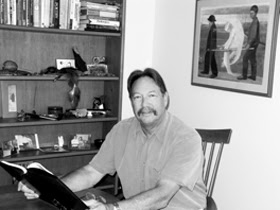
( Click on picture to view) Elizabeth Lund--Host of Poetic Lines interviews Host of Poet to Poet-- Doug Holder

Wednesday, May 05, 2021

May 9th 3PM: Poet and Short Fiction Writer Carolyn Kingyens


Carolynn Kingyens’ Bio 


I was born and raised in Northeast Philadelphia, a section of the city called “Parkwood,” a predominantly blue collar, Catholic neighborhood consisting of mid-50’s style brick row houses in domino-like configurations that were prone to chronic leaks. I am the youngest of seven children, of Italian descent.


It was an awesome neighborhood to be a kid in the eighties. We’d play games like stick ball, wire ball, Freedom, and when we got a little older, Spin the Bottle and Seven Minutes in Heaven -  in the closets at basement birthday parties. One of my favorite memories as a kid was attending St. Anselm Parish carnivals every Spring. It was our neighborhood’s version of Disney World. 


One of the rites of passage, in Parkwood, was to go explore the ruins and underground tunnels of “Byberry” (Byberry Mental Hospital), these creepy, turn-of-century decaying buildings with a morbid past of patient abuse and cover-ups. We’d be gone for hours, back before there were cell phones and helicopter parents. 


I wrote an essay about Byberry, coining ourselves “The Goonies of Northeast Philly.” It was published last year in the Brooklyn-based arts and culture magazine - Across the Margin. 


My parents would leave Catholicism for Evangelical Christianity sometime after my Christening, in the mid-to-late ‘70s, and this caused a chasm, at least for a while, within my extended family and neighborhood. It was a different time back then, a time when people tended to create families and communities around their own faith. After a while, it started to feel, unconsciously, of course, Us and Them, Them and Us.


I highlighted this Us/Them feeling in a poem written back in 2008. It was published in a now defunct online arts journal.


I think before I was a poet and writer, I was an observer. But I didn’t become an observer until I felt like I was on the outside of something, and that chasm created, after my family left Catholicism, caused my childhood world to shift some. I was also a very sensitive child, and could walk into a room and feel other people’s vibes, good or bad. Let’s just say I knew where I was welcomed, and where I wasn’t so observation and intuition became that steady ground for me in a not so steady world. 


It was around the sixth grade that I started carrying one of my brothers’ busted up Walkmans with me for all those long bus rides to my private Christian school. I’d found that listening to music would often soothe my growing anxiety, along with being a quasi-companion. 


I always say that music was my first teacher of poetry. I can remember going to Sam Goody to buy Tori Amos’ Little Earthquakes in 1992, then afterwards going home to lie on my daybed, where I’d read her poetic, angst-filled lyrics along to her music. Songs like “Winter,” “Silent All These Years,” “Me and a Gun” and “Precious Things” - 


Some of the music I was listening to back then, and still listen to today, include, of course, Tori Amos, Counting Crows, Ani DiFranco, Radiohead, Joy Division and New Order, Notorious B.I.G., Dr. Dre, Rolling Stones, Muddy Waters, Bruce Springsteen, David Bowie, Tom Waits to name a few.


In 1995, I started hanging out with an older writer-friend, someone who’d shared my taste in music and independent films. In a way, he’d become a mentor without being a mentor. He was the one who’d hand me a copy of John Irving’s A Prayer for Owen Meany, telling me to read it.


I was never a reader up to this point, and this book was over 600 pages. Who was he kidding, I’d thought. But I took it home anyway, and read the entire book within a few days. I couldn’t put it down, and even cried at the end because I’d become so vested in the central characters. Next, I read three more Irving novels, back-to-back, and then moved on to J.D. Salniger, Saul Bellow, Henry Miller, Virginia Woolf, the Beat poets. I would even go on to read The Way of The Pilgrim, the 19th century Russian work, that pea green-colored book Franny obsesses over in her quasi-existential breakdown in Salinger’s classic, Franny & Zooey.


Something happened at the intersection of observation, music, mentor and literature - writing happened, starting first with poetry.


In 1996, I started writing poetry, and had a few poems published in ‘97 and ‘98. It was around this time that I started writing short fiction as well. My first short story was entitled “Redneck Love.” I lost the hardcopy, the only copy I had, in one of my many moves.


I got married to my best friend and soulmate in 1999, and we both came from humble roots. I’d hoped to get an MFA, but put that dream on hold while we both worked and saved for a family. I stumbled into the field of business development when I found out that I had a knack for cold calling. 


This knack for cold calling began as a shoe idea back when I was a fashion design student at Philadelphia College of Textiles and Science, Fall of ‘93. The shoe idea came about because I didn’t like carrying a purse, still dont today. So the heel of the shoe would carry things. For example, a sneaker’s heel would act similarly to the ‘90s CD tray, where you push a little side button and a custom tray would slide out like a CD would and there would be a key and a money holder. Chunky-heel boots would sell with lipstick in the heel compartment. A  hiking boot heel hid a Swiss Army knife, bandaids, etc. The name of this idea was “Sole Keepers.” 


I’d met, and later went to work for, a creative entrepreneur, who’d go on to financially invest in “Sole Keepers.” He hired a patent attorney, and in the meantime, I would be cold calling VP’s of shoe companies such as Candies, Kenneth Cole, Nine West, FUBU, JCPenney, Steve Madden and Sketchers. We flew to New York, where we’d meet with decision makers and had prototypes made. It was an exciting time. And then, sadly,  9/11 happened shortly after, followed by the shoe bomber. The idea got permanently shelved. 


So for the next eight years, I stopped writing, and worked a series of sales jobs, becoming a chronic “clock watcher.” There were some aspects I’d enjoyed but sales was never a real passion. Writing was my passion, but during this time in my life, I was stuck in a creative wasteland. Nothing was happening, writing-wise. But in 2008, I started writing poetry again, and my poetry started to get published. 


Encouraged, I kept writing, even after I’d become a mother in 2010 and again in 2011, welcoming two beautiful daughters, both named after literary characters. I’d write poetry during their naps and into the evening while they were sleeping. And since the pandemic, I still write late at night while my girls are sleeping.


In the Fall of 2014, my family and I moved to New York, and that was when a real creative awakening started to happen, albeit slowly, at first. 


In 2018, I decided to put a manuscript together that would include poems written between 2008 - 2019. The first draft had a different title and direction. In the Fall of that same year, I took two back-to-back online poetry workshops with 24 Pearl Street, taught by brilliant poet, Peter Campion. 


In the Spring of 2019, I took a three month, peer-led poetry workshop.  By Fall, I’d felt more confident that my manuscript was finally complete. The new title would be Before the Big Bang Makes a Sound. The collective voice in this collection is intuitive, an outsider and observer, navigating a way through heartbreak, freakish accidents, ghosts, regret, illness while set against the beautiful, gritty landscape of New York.


Two weeks after sending my manuscript to a plethora of publishers, I would receive a book contract from Kelsay Books. I was in the middle of cooking dinner with my laptop atop of the granite counter, next to the stove, when I noticed the acceptance email popped up in my inbox. I started screaming with excitement, jumping up and down. My younger daughter immediately ran over to give me a big hug. My husband gave me a high five. It was definitely my “Rocky” moment. 


Channeling those old, cold calling days, I started to reach out to a bunch of New York City bookstores, including Barnes & Noble in Brooklyn, before my book was even released. Every bookstore I reached out to was super supportive, and said they would carry my debut book. I was beyond thankful and appreciative. 


Barnes & Noble had my debut book on their “Brooklyn Stories” display at the front of the store, right next to Paul Auster’s novel, The Brooklyn Follies and Jonathan Lethem’s novel, Motherless Brooklyn. It was a surreal moment for sure. In addition, Barnes & Noble would go on to do a generous instagram post in February 2020, writing this: 


"Contemporary, urban, and impassioned, Carolynn Kingyens’ poetry resonates with a darkening echo still felt long after the first read."


During the initial quarantine, and the months that ensued, I started writing short fiction again after being encouraged by a novelist-friend.  I've found that I love writing short fiction as much as I love writing poetry. This past year, I would go on to write six short stories that all got published. My most recent story is “The Peggy Effect.”


https://acrossthemargin.com/the-peggy-effect/


Wednesday, March 24, 2021

Interview with journalist, poet, astrologer, theatre director, Sally Cragin April 11, 2021


Sally Cragin is an award-winning journalist whose arts writing and theater reviews appeared regularly in the Boston Phoenix, Boston Herald, and most recently, the Boston Globe. She has won two Penney-Missouri Journalism awards for feature writing. She wrote “Moon Signs” for many newspapers nationwide, including the Boston Phoenix chain. She is also the author of The Astrological Elements, and Astrology on the Cusp (Llewellyn Worldwide) which have been translated and sold in a number of countries including India, Russia, Canada, British Virgin Islands, the Czech Republic and Estonia. From 1999-2001, she provided weekly astrological audio forecasts for Audible.com. She serves on the Fitchburg School Committee and is a State Committeewoman for the Worcester/Middlesex Democratic District.

Thursday, March 04, 2021

Sunday March 7 3PM Michael Seth Stewart editor of Yours Presently: The Selected Letters of John Wieners


AMerican poet John Wieners is thoroughly disenfranchised from the modern poetic establishments because he is, to those institutions, practically illegible. He was a queer self-styled poete maudit in the fifties; a protege of political-historical poet Charles Olson who wrote audaciously personal verse; a lyric poet who eschewed the egoism of the confessional mode in order to pursue the Olsonian project of Projective (outward-looking) poetics; a Boston poet who was institutionalized at state hospitals. Wieners lived on the "other side" of Beacon Hill, not the Brahmin south slope, but the north side with its working-class apartments and underground gay bars. Though Wieners' work is considered preeminent by many of the second half of the century's most important poets, the ahistoricizing process of literary canon-building has kept him at the fringes of not just the canon, but the established taxonomy of the all the great post-war undergrounds - the mimeo revolution, the San Francisco Renaissance, Black Mountain, New York, and Boston poetry communities that he moved through. Why was Wieners so disenfranchised? How can we make him manifest within the discourses of twentieth-century poetry?


Thursday, February 11, 2021

Poet David Daniel Sunday April 14, 2021


David Daniel is the author of Seven-Star Bird, from Graywolf Press, winner of the Levis Reading Prize, and his new collection, Ornaments, in the Pitt Poetry Series. Critic Harold Bloom has called him “an authentic heir to Hart Crane” and poet Tom Sleigh writes that “No one in any generation is writing poems that are like this: smart, visceral, immensely pleasurable to read.” Former long-time poetry editor of Ploughshares, Daniel founded and produces WAMFEST: The Words and Music Festival, which has brought together Bruce Springsteen with Robert Pinsky, Rosanne Cash with C. D. Wright, Talib Kweli with Quincy Troupe, along with over forty major artists for collaborative performances and conversations. He’s been on the Core Faculty of the Bennington Writing Seminars, and he teaches creative writing at Fairleigh Dickinson University. He lives in Belmont, Massachusetts.

Wednesday, January 20, 2021

Sunday Jan. 24 Doug Holder interviews Christine Tierney about her debut book of poetry chicken+lowercase=fleur,


Christine Tierney wants you to know she has three kidneys, and that it’s okay to ask her how and why. Her debut collection of poetry, chicken+lowercase=fleur, is available for pre-sale at Lily Poetry Review Books, and her (in progress) manuscript, make me unsick, was a finalist for the for the Gambling the Aisle Chapbook Competition and the Slate Roof Press Poetry Chapbook Contest. Her poetry has been nominated for Best of the Net, a Pushcart Prize, and the Best New Poets Anthology, and has been published in Fourteen Hills, Poet Lore, PMS, The Tusculum Review, Permafrost, Sugar House Review and many other fab places. Hailing from Boston, she lives with her wicked cool drummer husband, and works as an afterschool director where she encourages kids to embrace their weirdness. She has a BA in film from Emerson College, and an MFA in Creative Writing from the University of Southern Maine’s Stonecoast Writing Program. Christine is a funk, disco and kitty lover, as well as a wannabe comedian. 

Tuesday, December 15, 2020

Doug Holder Interviews Poet Gary Margolis--Dec, 2020


Gary Margolis is the author of four poetry books: Raking the Winter Leaves: New and Selected Poems (Bauhan Publishing, 2013); Fire in the Orchard (Autumn House Press, 2002), which was nominated for the 2002 Pulitzer Prize for poetry; Falling Awake (University of Georgia Press, 1986); and The Day We Still Stand Here (University of Georgia Press, 1983).

A Robert Frost Fellow at the Bread Loaf Writers’ Conference and a recipient of a Vermont Council on the Arts award, Margolis has published his poems in Poetry, American Scholar, Poetry Northwest, and other literary magazines.

A licensed psychologist, Margolis is the former executive director of counseling and former associate professor of English at Middlebury College in Vermont. He lives in Cornwall, Vermont, where he is a volunteer firefighter.

Sunday, November 22, 2020

Nov. 22, 2020 Doug Holder interviews poet Durane West


I am going to be interviewing poet Durane West this afternoon at 3PM.

He writes:

I write spoken word poetry that paints the perspective of an innercity black boy from Boston, MA. Raised in the city, he went to Boston Public Schools through high school. Winner of the Max Warburg Courage Essay Contest in 2001, Durane has been a frequent member of open mic scenes since 2017. He has performed at local spots like Haley House, Lizard Lounge, and Cantab Lounge among others. He is currently working toward creating his first chapbook. A former tour guide at Fenway Park, Durane works for an education non-profit that supports BPS students."

Friday, November 13, 2020

Doug Holder Interviews Outlaw Memorist, Poet and Editor Alan Kaufman Sat Nov. 14, 2020 3PM


Alan Kaufman, born January 12, 1952, in New York City to a French Holocaust survivor and raised in the Bronx, is a teacher, writer, poet, editor, performer, artist, and impresario known for his work as editor of the Outlaw Bible series of literary anthologies. In addition to his editorial work on these books and the alternative Jewish cultural magazine Davka , which he helped to found, Kaufman is also the author of a memoir, Jew Boy (2000), and the novel Matches (2005) as well as several volumes of poetry. Active as a poet from an early age, Kaufman has been involved in both the New York and San Francisco poetry scenes and played a role in the popularization of Spoken Word poetry in both the United States and abroad. More recently, Kaufman has taken up the brush as a painter, a medium in which he has proven equally productive.

A prolific writer from an early age, Kaufman both edited and published in the Magpie , the literature and arts journal of DeWitt Clinton High School. After graduating high school in 1970, Kaufman enrolled at the City College of New York. In 1971, Kaufman traveled across the United States by riding freight trains. In the course of his travels, he was arrested in North Platte, Nebraska, and was the victim of anti-Semitic slurs by his jailers, an event that profoundly affected him. Returning to New York, Kaufman began a life-long exploration of his Jewish heritage and identity. One of the first tangible results was Kaufman's founding of the Jewish Arts Quarterly , the first issue of which appeared in 1974.

After graduating from CCNY in 1975, Kaufman started to publish his short stories. In 1977, Kaufman moved to Israel where he lived and worked on a Kibbutz. He also became a contributing editor to the magazine Shdemot . In 1979, he became an Israeli citizen and enlisted in the Israel Defense Forces (IDF). During his initial service, he helped start the IDF Journal , the first English language journal published by the IDF. When his enlistment ended in 1984, Kaufman returned to the United States. The same year, his first book, a collection of short stories titled The End of Time , appeared.

Accepted into the Columbia University Writer's Program in 1986, Kaufman soon after published his first edited anthology, The New Generation: Fiction for Our Time from America's Writing Programs . He also began to create drawings around this same time. In 1988, he became editor-in-chief of the Jewish Frontier , married Esther Murray, and had a daughter, Isadora. Kaufman left Columbia in 1989 and separated from his wife, who moved to Israel with their daughter. After becoming involved with the New York underground poetry scene at the Nuyorican Poet's Café, Kaufman moved to San Francisco in 1990. Once there, he quickly became engaged in the Spoken Word poetry scene at the legendary Café Babar and published his first collection of poetry, American Cruiser . Kaufman chronicled his thoughts and experiences of the emerging Spoken Word poetry movement in a series of articles for HOWL: San Francisco Poetry News . His growing prominence led, in 1992, to his first Spoken Word tour of Germany with poet Bob Holman. He returned two more times over the next few years, once with a larger group of poets in 1993 and again in 1994 with Allen Ginsberg, Kathy Acker, and others as part of the Berlin Jewish Cultural Festival. Despite his international presence, Kaufman remained committed to the San Francisco scene. In 1993, after police shut down a poetry reading, Kaufman helped to lead the San Francisco Poets Strike, which received national and international attention and forced the city to rescind the ordinance requiring poetry readings to be issued permits. At the same time, Kaufman was organizing the successful WORDLAND reading series, which brought together poets and rap and hip-hop artists.

In 1995, Kaufman worked with New Jersey poetry legends Danny Shot and Herschel Silverman on a special issue of Long Shot magazine called "It's the Jews!". A wildly successful anthology of underground Jewish artists and writers, the work helped to solidify Kaufman's thinking about alternative culture and his own Jewish identity. Kaufman's thought found form in the magazine Davka: Jewish Cultural Revolution . Although it lasted only three issues (1996-1997), Davka proved a major influence on later publications covering alternative Jewish culture and on the very idea of an alternative Jewish culture.

In 1998, Kaufman began work on what has become one of his most notable achievements: the Outlaw Bible series. Shaped by his experiences with the national and international Spoken Word movement, the first volume of the series, The Outlaw Bible of American Poetry , was published in 1999. The second volume in the series, The Outlaw Bible of American Literature , was edited by Kaufman, Neil Ortenberg, and publisher and editor Barney Rosset and came out in 2004. The final volume in the series, The Outlaw Bible of American Essays , was published in 2006.

In 1999, Kaufman's memoir Jew Boy: A Memoir was purchased by Fred Jordan. It was published the following year by Fromm International. Kaufman also made his debut as an artist in 1999, holding his first one-man show at the Chelsea Fine Art Building in New York. In 2004, he exhibited his paintings alongside those of artists David Newman and Tim Wicks in San Francisco. After another show with Newman and Wicks in 2005, he sold his first paintings. His novel Matches , begun during his service with the IDF reserves in 2003 and loosely based on his experiences, was sold to Little, Brown/Time-Warner Books and published in October that year.

In 2007, Kaufman signed to the Himmelberger Gallery in San Francisco where his paintings, exploring a variety of styles he grouped under the name "Visionary Expressionism," were shown several times. Controversy erupted, however, when the gallery's plans to publish a catalog of his paintings fell through over an objection to the use of the word "Zionism" in the title and the Zionist theme of some of the included articles. Kaufman, together with Polly Zavadivker, ultimately launched his own imprint, Miriam Books, to publish the catalog.

Friday, October 23, 2020

Oct. 25, 2020 Poet Steven Cramer will be my guest on Poet to Poet


Steven Cramer’s sixth poetry collection, Listen, was published in 2020 by MadHat Press. His previous books of poetry are The Eye that Desires to Look Upward (Galileo Press, 1987), The World Book (Copper Beech Press, 1992), Dialogue for the Left and Right Hand (Lumen Editions/Brookline Books, 1997), Goodbye to the Orchard (Sarabande Books, 2004)—winner of the 2005 Sheila Motton Prize from the New England Poetry Club and named a 2005 Honor Book in Poetry by the Massachusetts Center for the Book—and Clangings (Sarabande Books, 2012). His poems and reviews have appeared in The Atlantic Monthly, Field, Kenyon Review, The Nation, The New Republic, The Paris Review, Ploughshares, Poetry, and other journals. His work is represented in anthologies such as The Autumn House Anthology of Contemporary American Poetry (Autumn House Press, 2005 and 2011), The Book of Villanelles (Knopf Everyman’s Library Pocket Poets Series, 2012), and The POETRY Anthology, 1912–2002 (Ivan R. Dee, 2002). He has also written essays for Simply Lasting: Writers on Jane Kenyon (Graywolf Press, 2005); Touchstones: American Poets on a Favorite Poem (Middlebury College Press, 1996); and Until Everything Is Continuous Again: American Poets on the Recent Work of W. S. Merwin (WordFarm, 2012). Recipient of two grants from the Massachusetts Cultural Council and a National Endowment for the Arts fellowship, he has taught literature and writing at Bennington College, Boston University, M.I.T., and Tufts University; and he founded and now teaches in the Low-Residency MFA Program in Creative Writing at Lesley University in Cambridge, Massachusetts. 

Saturday, September 26, 2020

Interview with writer Tom Meek Sep 30th 3PM


Tom Meek is a writer living in Cambridge. His reviews, essays, short stories and articles have appeared in The Boston Phoenix, The Boston Globe, The Rumpus, Cambridge Day, Charleston City Paper and SLAB literary journal. Tom is also a member of the Boston Society of Film Critics and rides his bike everywhere.

Friday, September 25, 2020

Interview with Boston Playwright Debra Wiess


Debbie Wiess is a Boston-based writer, who writes in French and English. She has created a wide variety of projects for stage and screen, poetry and short stories, in both languages. Her work has been presented throughout the US and abroad, in traditional theaters and alternative venues (including in a moving trolley during the Somerville Open Studios several years ago), as well as on cable, radio and the internet. Many of her poems have been published. She is a proud member of the Bagel Bards and has had work included in its Anthology since joining the group in 2012.

Thursday, September 17, 2020

Interview with Rod Kessler: " What I Am Always Waiting For" by Malcolm Miller August 2020


Malcolm Miller (1930-2014), reclusive poet of Salem, Massachusetts and Montreal, published dozens of books of poetry during his lifetime. Many of these were cheap, self-published books; a few were published by main-stream presses. Seldom holding a job, sometimes homeless, the constant in Miller's life was poetry. Rod Kessler, who wrote the introduction for this volume of Miller's Selected Poems, was among the advocates for Miller and his poetry. He and other admirers sifted through over 3,000 of Miller's poems to select the ones included in What I Am Always Waiting For.

Thursday, July 30, 2020

Friday July 31 3PM writer Jacques Fleury


Jacques Stanley Fleury is a Haitian-American Poet, Author and Educator. He holds an undergraduate degree in Liberal Arts and currently pursuing graduate studies in the literary arts at Harvard University online. Once on the editing staff of The Watermark, a literary magazine at the University of Massachusetts, his first book Sparks in the Dark: A Lighter Shade of Blue, A Poetic Memoir was featured in and endorsed by the Boston Globe. His second book: It's Always Sunrise Somewhere and Other Stories is a collection of short fictional stories dealing with the human condition as the characters navigate life's foibles and is featured on Good Reads. His current book and hitherto magnum opus Chain Letter to America: The One Thing You Can Do to End Racism, A Collection of Essays, Fiction and Poetry Celebrating Multiculturalism explores xenophobia in America and is available at The Harvard Book Store, Barnes and Noble and Amazon. His work has been published by Poets Reading The News, Oddball Magazine, The Boston Haitian Reporter, Spare Change News, The Somerville Times, Patch News, Boston Events Insider, The International Network of Street Newspapers (INSP) reaching over 120 countries and languages, 'HOME Anthology' edited by Anne Brudevold of Eden Waters Press and the Cornell University Press anthology 'Class Lives: Stories from across Our Economic Divide' edited by Chuck Collins et al. He was the Official Poet for the Annual Urban Walk for Haiti and has made personal appearances at many Boston and Cambridge area venues including Harvard amf North Eastern Universities  and many others. His Cd A Lighter Shade of Blue as a lyrics writer in collaboration with the neo-folk musical group Sweet Wednesday is available on Amazon, iTunes & Spotify to benefit Haitian charity St. Boniface. He is Cantabrigian living in the great state of Massachusetts.  

Saturday, July 18, 2020

Monday July 20, 2020: Interview with author Nick Antonopoulos about his new novel "Slender Notions."


SEE IT LIVE at 5PM  July 20th at....    https://endicott.zoom.us/j/98897183906


Nick Antonopoulos' novel Slender Notions explores opiate addiction, writing and the quest for joy. 
“I have nothing to offer anybody exce


pt my own confusion.” – Jack Kerouac

Kerouac’s words were never more timely than they are today. We are living in a period of confusion, unrest, injustice, and absurdity. We need laughter in our lives as a way to combat the day-to-day drudgery of modern life. Debut author Nicholas Antonopoulos explores this theme in his unflinchingly unapologetic debut novel, Slender Notions. 

Leo is a hard living aspiring writer cut from the Kerouac cloth. He has a secret heroin addiction to cope with the inanity of his life in suburban Massachusetts. Leo bides his time with drug-addled trips to the Zen Monastery and pilfers the works of Henry Miller along with his idol, Jack Kerouac, from the local bookstore. At a poetry reading in Boston, Leo meets Cole, a divorced man on the brink of a mental breakdown and a streetwise homeless man named Zanzi.  Together they devise a perfect plan to combat the struggles of their lives: The Laughter Challenge. The men decide to completely give into hysterical laughter. Echoing the words of Henry Miller, “To make the world laugh is one thing; to make it happy is quite another.” Leo and his new friends want to start a revolution from stoicism and austerity to pure joy and prove that laughter truly is the best medicine.

While their viral video of mass laughter propels Cole to guru status and new found fame, Leo and Zanzi wonder if madness really is the path to happiness and why unbridled joy and silliness are stigmatized in a society riddled with anxiety and depression?

Sunday, July 12, 2020

Timothy Gager on Poet to Poet Writer to Writer July 14, 3PM

Timothy Gager
 https://endicott.zoom.us/j/94080049896


Timothy Gager is the author of fifteen books of fiction and poetry. His latest, Spreading Like Wild Flowers,is his eighth of poetry. Timothy hosted the successful Dire Literary Series in Cambridge, Massachusetts from 2001 to 2018 and was the co-founder of The Somerville News Writers Festival. He has had over 600 works of fiction and poetry published, of which sixteen have been nominated for the Pushcart Prize. His work also has been nominated for a Massachusetts Book Award, The Best of the Web, The Best Small Fictions Anthology and has been read on National Public Radio.

Timothy is the Fiction Editor of The Wilderness House Literary Review, and the founding co-editor of The Heat City Literary Review. A graduate of the University of Delaware, Timothy lives in Dedham, Massachusetts with some fish and two rabbits, and he is employed as a social worker. He is currently seeking representation for his third novel, Joe the Salamander, a semi-finalist for The Holland Prize.